
AI for Insurance
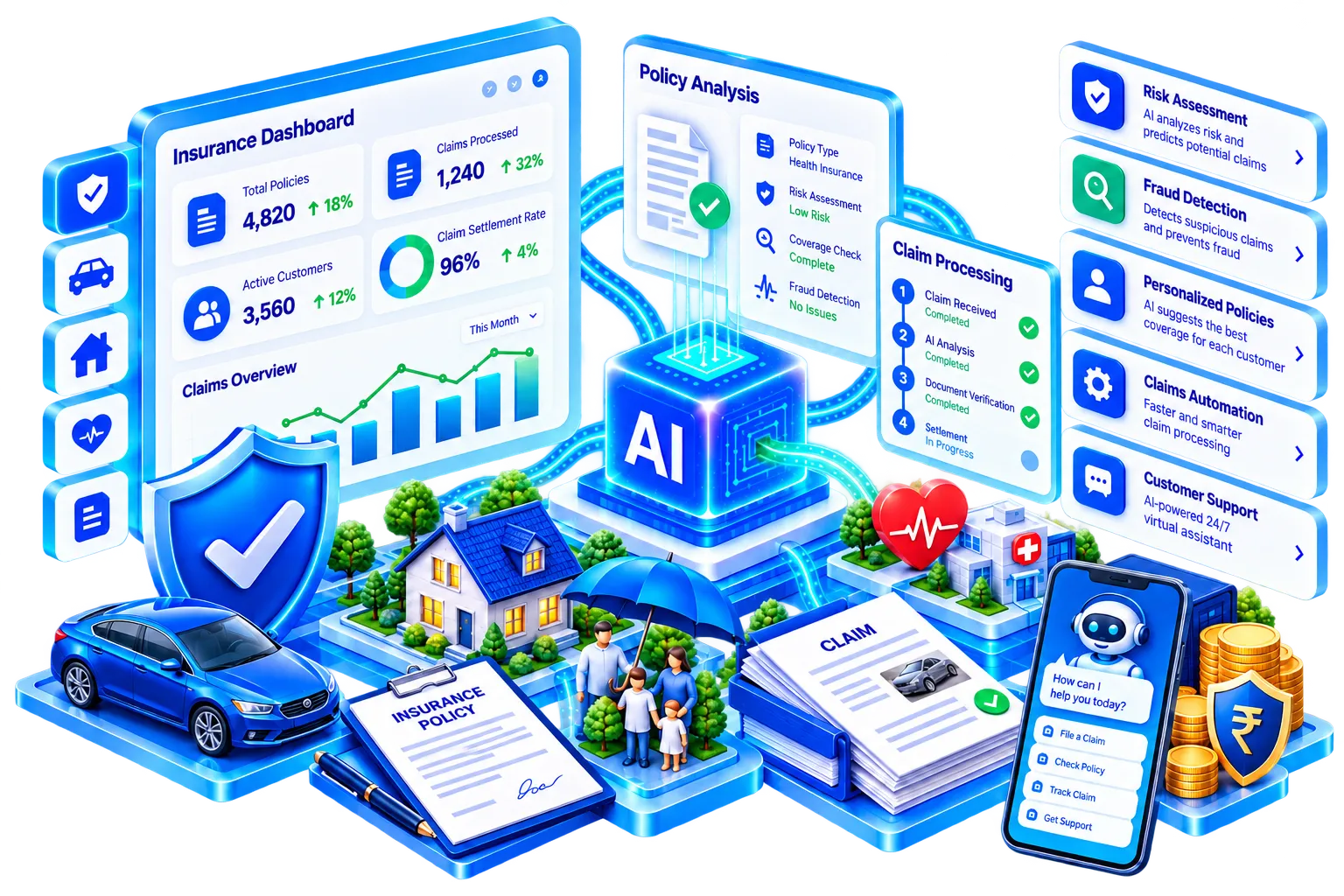
Why AI for Insurance
- An insurance workflow mapped around claims, policies and review decisions
- Claims information extracted into the fields your systems and teams need
- Anomaly signals prioritized for adjuster or investigator review
- Relevant risk context surfaced for underwriters without automating the decision
- A monitored release with explainability, permissions and human-review controls
Insurance runs on documents, judgment calls and speed — a claim needs to be processed quickly, but also checked carefully.
DashCloud builds AI for insurers that extracts information from claims documents, flags patterns worth a closer look, and supports underwriting with better data — all built to flag for human review on anything material, not to automate payouts unattended.
Inside AI for Insurance
Claims document intelligence
Extracting and organizing information from claims documents and forms, cutting manual data entry.
- →Forms and supporting documents organized automatically
- →Key fields extracted into claims workflows
- →Low-confidence information routed for review
OUTPUT Claims document intelligence
Fraud and anomaly detection
Flagging claims that deviate from expected patterns for adjuster review, not automatic denial.
- →Claims that deviate from expected patterns surfaced
- →Signals prioritized by severity and context
- →Adjusters decide; the system never denies automatically
OUTPUT Fraud and anomaly detection
Underwriting support
Surfacing relevant risk signals to underwriters faster, without automating the underwriting decision itself.
- →Relevant policy and risk signals brought together
- →Underwriters see evidence behind each signal
- →Final assessment remains with the underwriting team
OUTPUT Underwriting support
Process the routine and review what matters
Claims teams
Process claims faster without cutting corners on document review or evidence.
Fraud investigation teams
Catch suspicious patterns earlier across a high volume of claims.
Underwriters
Get relevant risk context faster while keeping the underwriting decision with your team.
Adjusters
Spend less time gathering information and more time reviewing the claim itself.
Insurance operations
Reduce manual handoffs between documents, systems and the people responsible for decisions.
Insurance leaders
Create a measured path from one controlled workflow to broader claims intelligence.
Built around real teams
Claims teams
Process claims faster without cutting corners on review.
- Which documents and fields matter most?
- What can be extracted safely?
- When should a person verify the result?
Fraud investigation teams
Catch suspicious patterns earlier across a high volume of claims.
- Which patterns deserve closer review?
- How should false positives be managed?
- What evidence should investigators see?
Underwriters
Get relevant risk data faster when assessing a policy.
- Which risk signals are useful?
- How should they be explained?
- Where must underwriting judgment remain?
From claims data to more confident decisions
- 01
Understand
Map claims documents, policy data, adjuster workflows and the decisions where earlier information can improve response time or review quality.
Output: Claims, policy and review workflow map - 02
Scope
Choose the first claims, fraud or underwriting workflow and define thresholds, permissions and the points that require human judgment.
Output: Prioritized insurance use case and human controls - 03
Build
Develop and validate extraction, anomaly or risk-support workflows against representative historical cases, with reasons and evidence visible.
Output: Validated document, anomaly or risk-support workflow - 04
Launch & improve
Release with adjuster and underwriter feedback, outcome monitoring and a process for tuning signals as products and claim patterns change.
Output: Controlled release with monitoring and review guidance
Improve claims intake, or support the risk team
Focused insurance pilot
Prove one claims, anomaly or underwriting workflow using representative historical cases.
- ✓Claims-system and data review
- ✓One defined insurance use case
- ✓Adjuster or underwriter review design
- ✓Pilot findings and next steps
Insurance AI workflow
Build and deploy a supported capability connected to the systems and teams your insurer already uses.
- ✓Claims, fraud or underwriting support
- ✓Insurance-system integration
- ✓Explainability and human controls
- ✓Launch support and documentation
Continuous claims improvement
Keep signals and workflows aligned as products, policies and claim patterns change.
- ✓Outcome and false-positive reviews
- ✓New document types or products
- ✓Model and workflow improvements
- ✓Ongoing technical support
Everything you need to know
Still have questions?
Can't find what you're looking for? Talk to our team and we'll point you in the right direction.
Contact usNo — our default approach flags for adjuster review; the decision stays with your team.
It flags for review rather than automatic denial, and we tune detection thresholds against your real claims data during onboarding.
Yes, where your system offers an API — this is assessed during scoping.